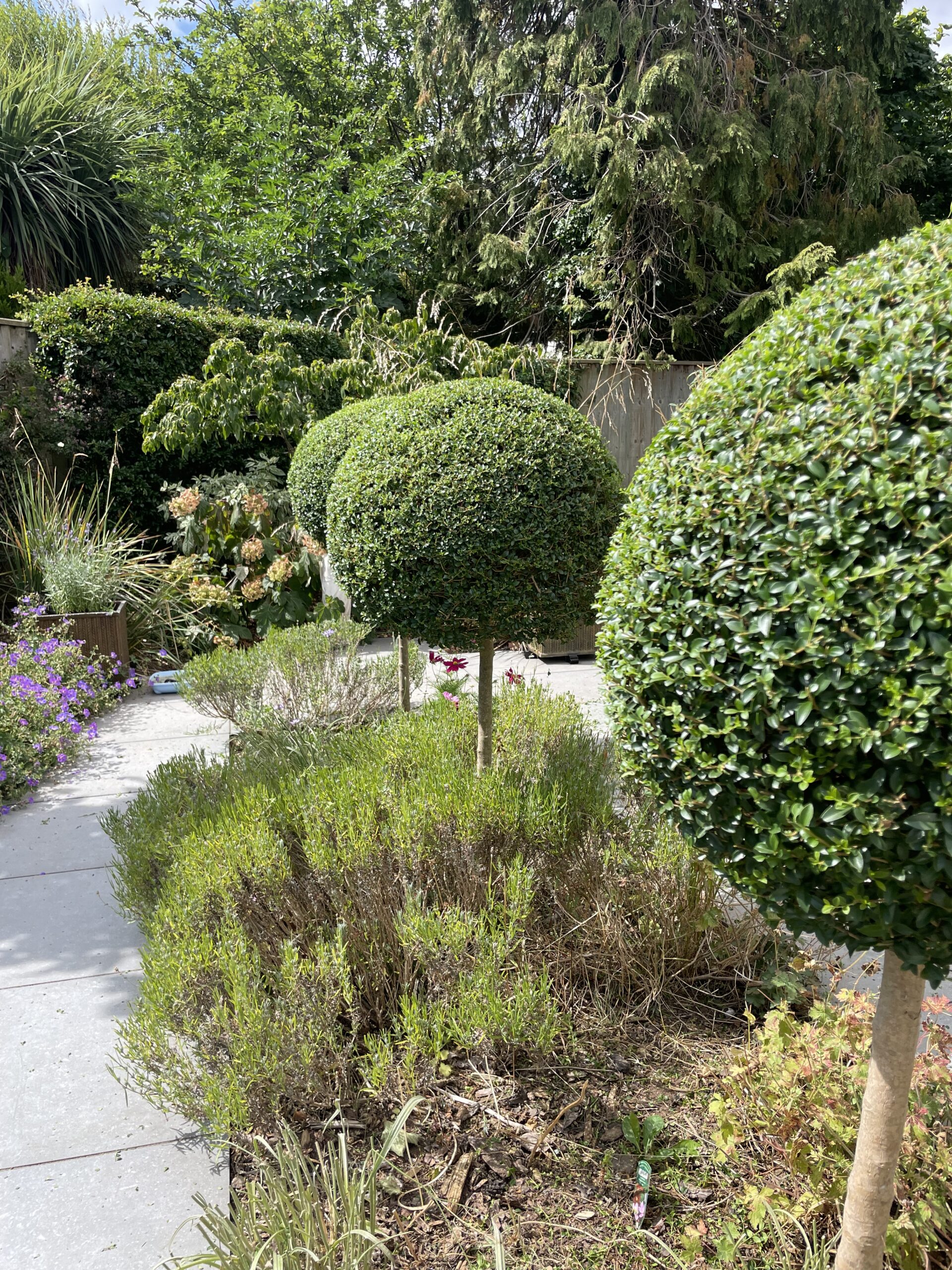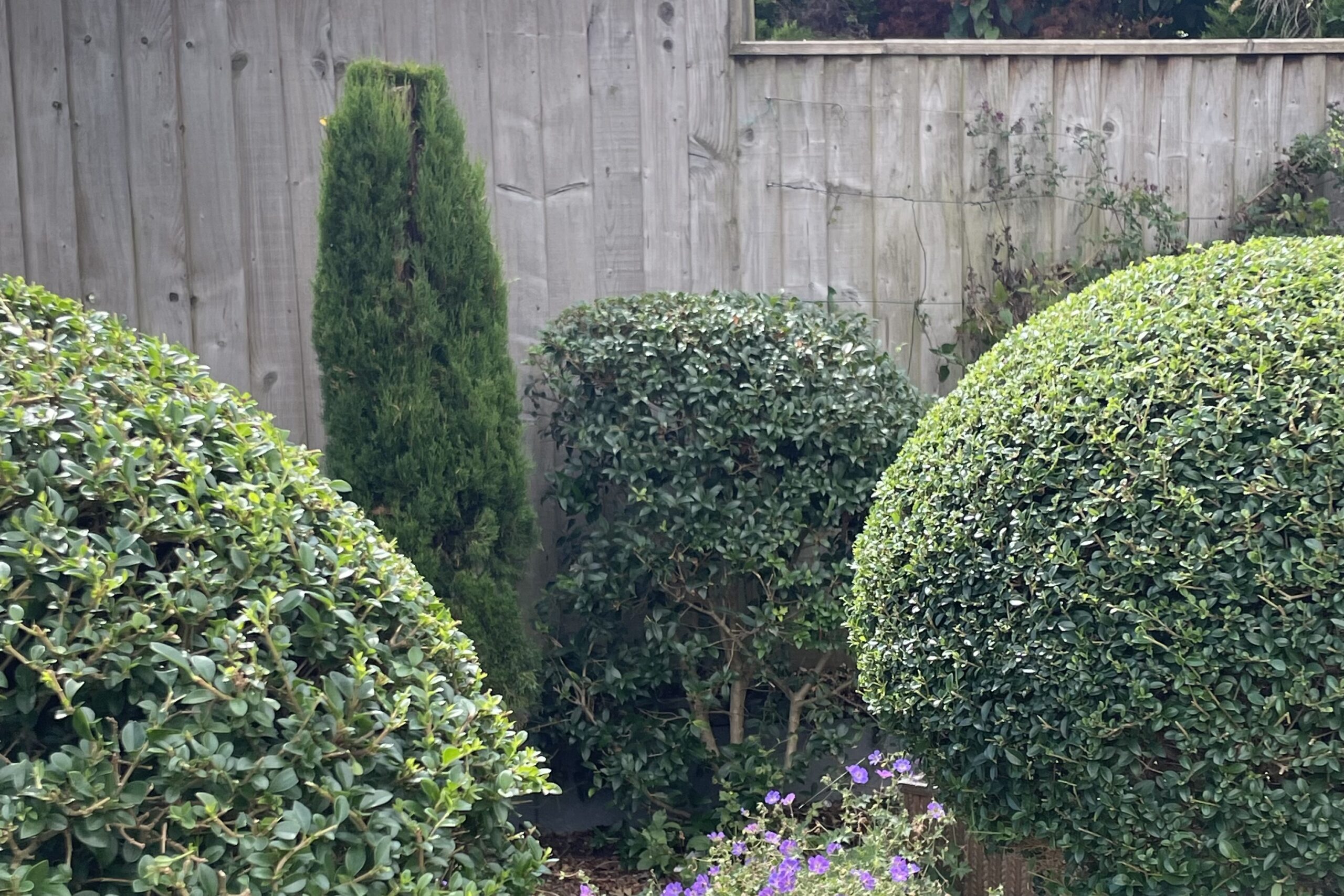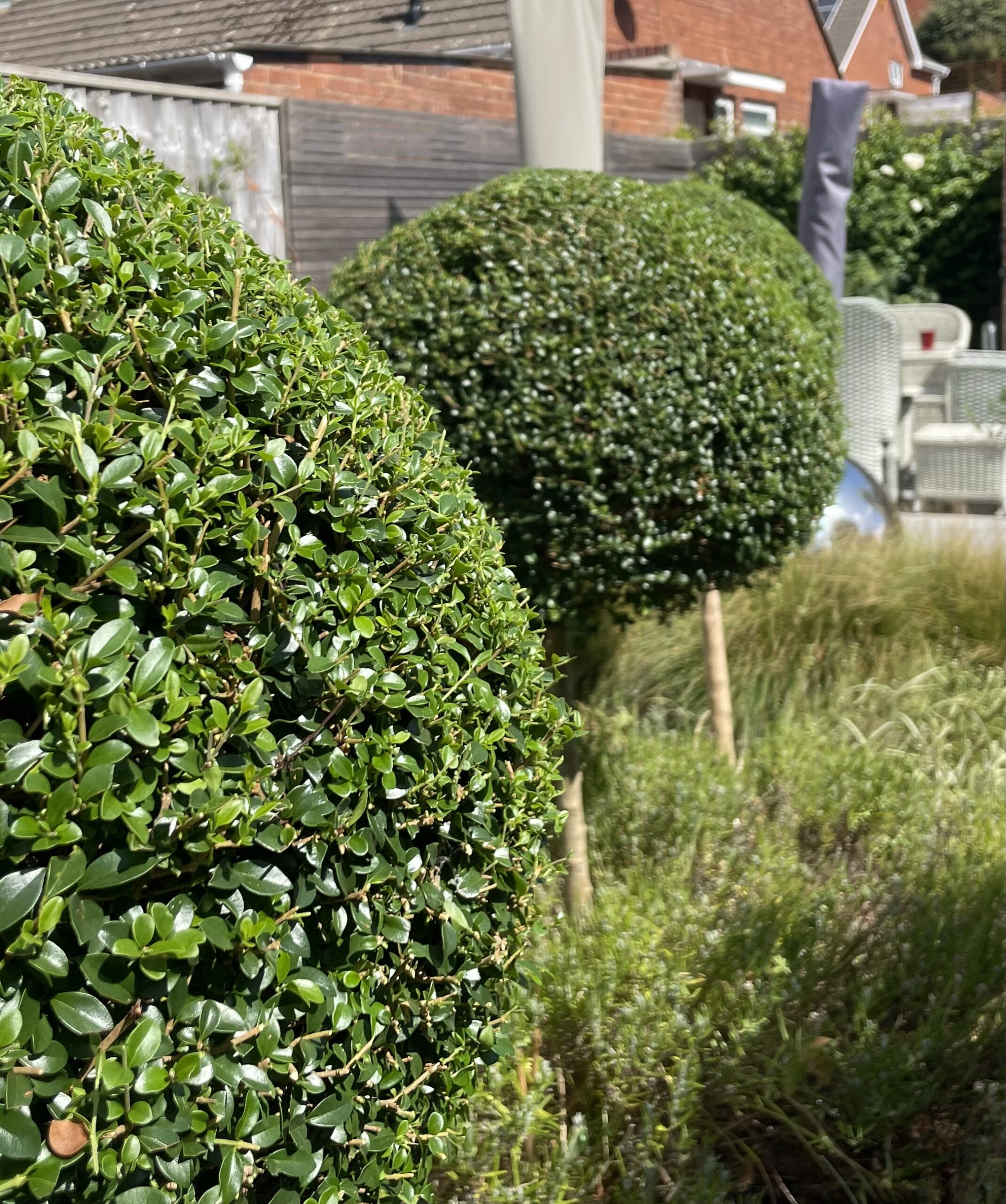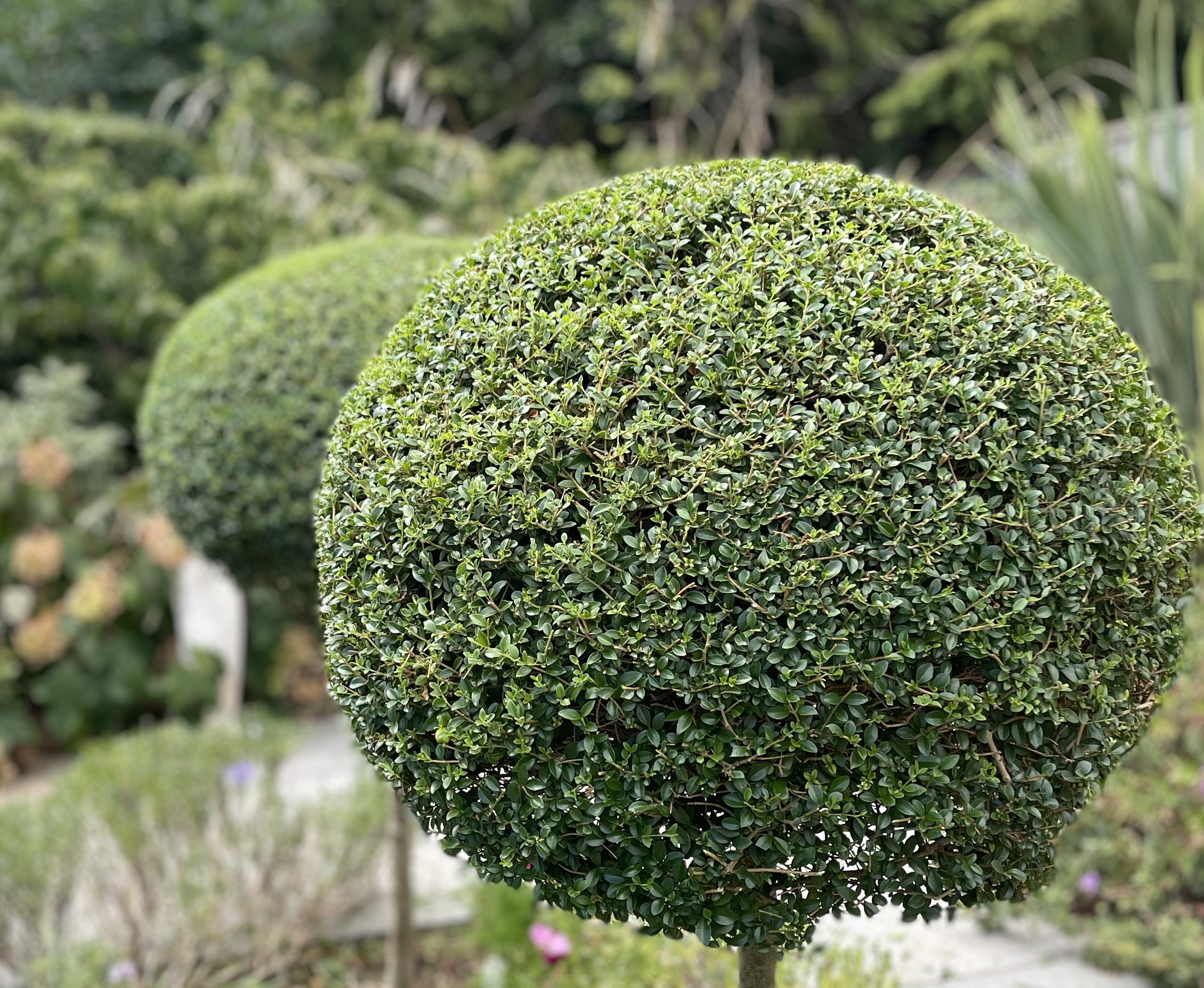
This strong evergreen planting forms the backbone to this formal garden in the centre of Exeter in Devon. Holding multiple elements together with strong lasting features, bold lines and architectural appearance. These plants not only give structure to the garden but also provide a backdrop for other flowering and more showy plants. When cutting any topiary on a regular basis it is important to trim not only the outer perimeter lines of the plants but also to clean out any longer running shoots and dense patches within the foliage. This will ensure that air can move through the foliage and not allow humidity to build resulting in pest and diseases to establish.
The main feature of formal topiary its emphasis on control and balance. Every line is intentional, every curve carefully maintained. In grand estates, topiary may border pathways, flank entrances, or punctuate parterres with strong visual rhythm. In smaller gardens, even a pair of clipped bay trees in pots can introduce a stately effect. Plants chosen for formal topiary are usually dense, small-leaved, and evergreen, allowing them to hold a clean outline throughout the year. Box, yew, holly, privet, and bay are especially valued for their resilience and ability to respond well to repeated trimming. Regular pruning is essential, as the beauty of formal topiary depends on crisp edges and well-proportioned shapes. However, if formal topiary is combined with natural planting a pleasing natural balance can be achieved.